Showing posts with label photography. Show all posts

Sunday, October 01, 2006

Some photos

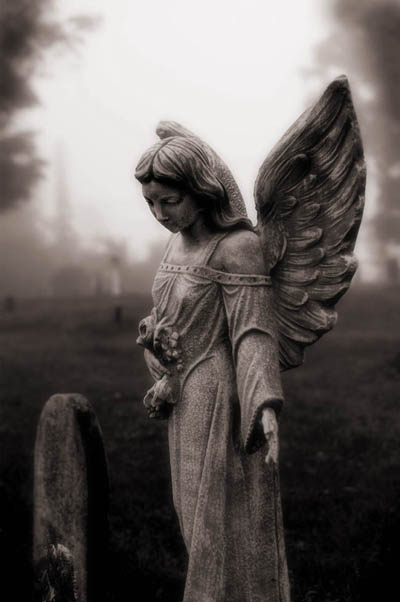
Here's a few shots I took on Saturday morning. Some really thick fog rolled in, so I thought I would take the opportunity to take some photos in the Gatineau Hills. The photo below was the only one I was pleased with.


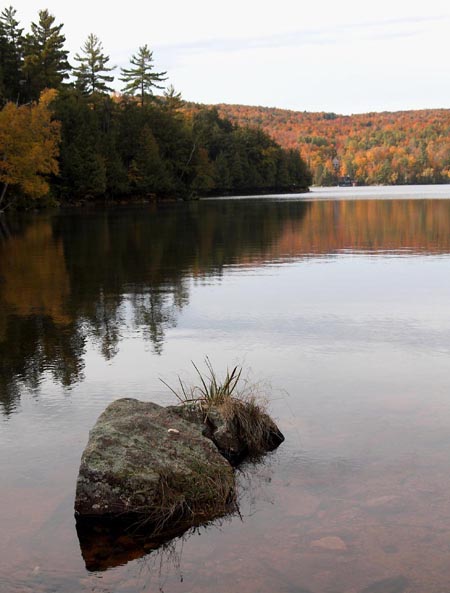
Once the fog lifted, I managed to get some fall colour pics. As you can see, it's just about to peak in the Ottawa area. We probably have another 1-2 weeks before it's all gone.


[Photograher's note: The angel was cropped, blurred, toned and converted to B&W with Photoshop. The rest of the photos were cropped and corrected for levels and contrast. Equipment: Pentax *ist DS, with Pentax FA31/1.8 limited and Tamron 28-75/2.8]

Saturday, September 16, 2006

Toys, toys, toys

[Photography geek mode on]


Photokina 2006, a bi-annual European photography show, is coming up at the end of September. And, my photo-geek friends, what does that mean? Yup, new toys! There's been a series of pre-show announcements, and there's been a couple that have caught my eye.


I'm saving my pennies for this new digital SLR from Pentax, the K10D. It's a mid-level DSLR meant to compete against the Nikon D80/D200 and the Canon 30D. However, it's got a few tricks up its sleave, including:

  • Self-cleaning CCD, like that found in Olympus DSLRs

  • In body shake reduction, similar to Konica-Minolta's 5D. Effective up to 3-4 stops

  • Weather Sealing

  • Support for Pentax's new 'supersonic' lenses that should greatly improve AF speed. I guess Pentax has decided to compete against Canon's USM lenses.


I'm rather chuffed at this camera. I'm able to get shake reduction with my manual focus lenses from the 1970's! Whoo hoo! Also, it's price of $919US makes this a relative bargain. I don't think you get this set of features anywhere else below $5000. If you want more details, you can look at the insanely detailed preview at DPReview.com.


And for you well-monied traditionalists, here's the new Leica M8. It looks like another M-series rangefinder, but it's not a rehashed M7. They've put in a new viewfinder to adapt to the new CCD. It has all the film rangefinder quirks we know and love (or hate) for 'only' $4800 US. Ouch. Must be the 'Leica' name. This uses all the M-series lenses made since 1954.

Monday, August 14, 2006

The Best Photo Assistants in America

For you photo nuts: American Photo magazine has an article on some up-and-coming photographers in the U.S. It chronicles a few promising photographers who are doing stints as assistants. Most photographers need to get some real-life experience, and they gain that by assisting established pros. This is well worth the read if you're considering a career in photography. And check out their galleries. There's some pretty good stuff there.

Wednesday, July 19, 2006

Wedding photography for fun and profit?


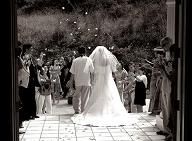
Well, the wedding season is in full swing with the bridal hordes flocking to the altar in massive numbers. I've been privileged to attend a few weddings this year and I'm happy for all of my friends who tied the knot. It's indeed a joyful time. Now I've been experimenting with wedding photography this year and I've learned quite a few things. I felt I should share them with my regular readers (the both of you).

  1. Being successful with a wedding shoot requires complete competance with photographic technique, equipment, and most of all, people skills. That means I'll never do wedding photography as a full time job, since I'm rather lacking in these skills - especially those involving fellow human beings. "Hey you, in the white dress! Move over there! Now smile, and look happy!"

  2. You need to pick out a good location beforehand. For instance, Parliament Hill in 35 degree weather during a protest march is a good example of bad location. So is a park infested with mosquitos.

  3. Poses are very important during formal shots. Watch out for wierd hand positioning and 'unbalanced' placement of subjects. Be careful to avoid situations where a tree in the background appears to stick out of the grooms head. Most of all, be very, very careful when the bride wears a strapless dress. They look very nice, but when the bride is posed behind a bush or a low wall, only the shoulders and head will be visible. This in turn makes it look like she's wearing nothing. Unless the bride is an exhibitionist, she won't be pleased.

  4. Techie tip: If you're using a DSLR, shoot RAW. During the fast-pace of weddings, I guarantee that YOU WILL SCREW UP. There will be times that you will mess up the metering mode or the exposure compensation. Or you may have set the wrong ISO. Or even worse, you left your camera at the wrong white balance setting. In these cases, RAW can save your butt. It's hard to recover from these mistakes when shooting JPEG, especially white balance errors, but RAW allows you to easily correct these mistakes. RAW files are big, so you'll need lots of memory card capacity. Don't have 2 Gigs? Well, beg, steal or borrow more cards. You'll be glad you did.

  5. Storing wedding photos on cheap CD-Rs is not a good idea. Wedding photos are supposed to be memories that last a lifetime. CD-Rs only last for 2-5 years. If there are any pictures you want to keep, PRINT THEM OUT. I don't mean on a photo printer either, but at your favourite film processing lab. Those prints will last for decades. CD-Rs won't.


This isn't an exhaustive list, but it's the best I can do at 12 midnight! Feel free to suggest more tips.

Friday, June 16, 2006

On Photography: Digital vs. Film


Those who know me will know I really enjoy photography. I was thinking that it's about time I wrote something about it in the blog. On top of that, I might as well tackle a subject that's been popular with photographers for the past few years... It's the argument of film vs. digital. Which is better? What constitutes 'real' photography? Are digital cameras killing the 'art of photography'?

I encountered this question a number of times, most recently in the forums yesterday at DPReview.com. But it's an old question. I remember when I first started photography 9 years ago, I took a black and white photography course. Digital cameras were just being introduced into the marketplace and many of my classmates, who have been hobbists for decades, were wary of this new technology. They didn't consider the product of digital cameras 'photography'. It was something else. Something inferior, even alien. This argument is still going on. Below is an exerpt from one of my forum entries on DPReview.com on this subject, and my arguments why this film vs. digital debate is pointless.


I still shoot B&W 35mm film, but I'd say most of my colour photographs are done on digital. The reason is that I find B&W printing on fiber paper far superior to monochrome ink jet prints. However, digital color blows away film color prints.

But to address your question, digital and film photography have way more in common than purists would like to admit. Regardless of method, it all comes down to capturing light. It doesn't matter whether it's stored on a piece of silver hailde or a CCD. It doesn't matter whether you're using a Canon 350 XT or a Pentax K1000 - It's pretty much the same.

This never-ending debate of film vs. digital rarely ever addresses the fact that photography is not only about the camera. It involves lighting; the quality of the light and the direction of the light are extremely important. And of course, there's the subject matter and composition. These all make up a 'photograph'. It's not all about the camera. The fact that one uses a digital camera doesn't preclude these other components of the image.

If you think about it, there's really nothing you can do in digital that you can't do in a darkroom. It's just that digital is much more convenient. Film purists claim that digital photography allows all sorts of editing, such as color correction and changing details in the image. However, people have been doing extensive image edits since the late 19th century. There's plenty of photos out there that were doctored on film. I've seen a few examples at the National Gallery of Canada where people were added and removed. These photographs that were taken in 1915. Editing photographs isn't anything new.

Now, since digital makes things easier, does it mean it's a 'lesser art' than film photography? No. It's different than film, but it's certainly not a lesser art. Because it's simpler doesn't mean it's dumbed down or not worthy of consideration. In the film days, people would either develop film by hand or in a lab. Developing a film in a lab is easier and more convenient. Does this mean that using lab-developed film is a lesser art than printing hand-processed film? No. And neither is digital photography.

Now I've seen all sort of arguments comparing film and digital, such as dynamic range, resolution, yadda, yadda, yadda. I think these technical aspects are besides the point. I think what matters is the end product, which is the image. And in order to create the image you want, you need to use the right tool to capture the image. If digital gets you the results you want, then it's the right tool. If film gets you the results you want, then THAT's the right tool.
Use what's right for the job.
Powered By Blogger